The journey to finding the right foundation shade for you can seem like a lifelong one: it’s too light, too dark, too…something not quite right. How to find your foundation shade lies in the way it melts into your skin like it belonged there all along. If you need to slather your face with it to look natural, chances are it’s not your perfect shade. Your shade will give you confidence and look like you have nothing on. Too good to be true? Absolutely not. You can do it, and we’re here to help.
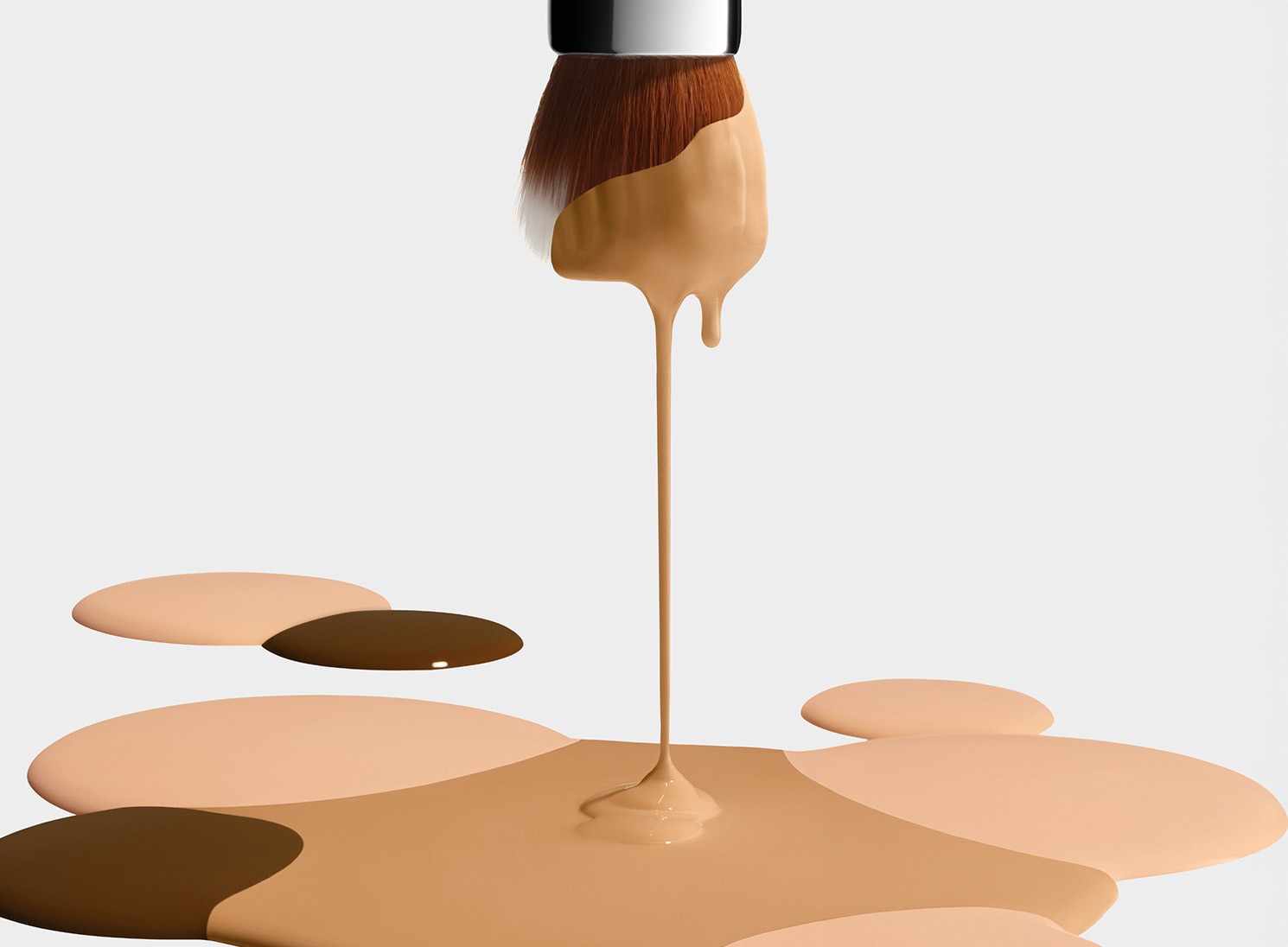
The Guide To Finding Your Foundation Shade
Read More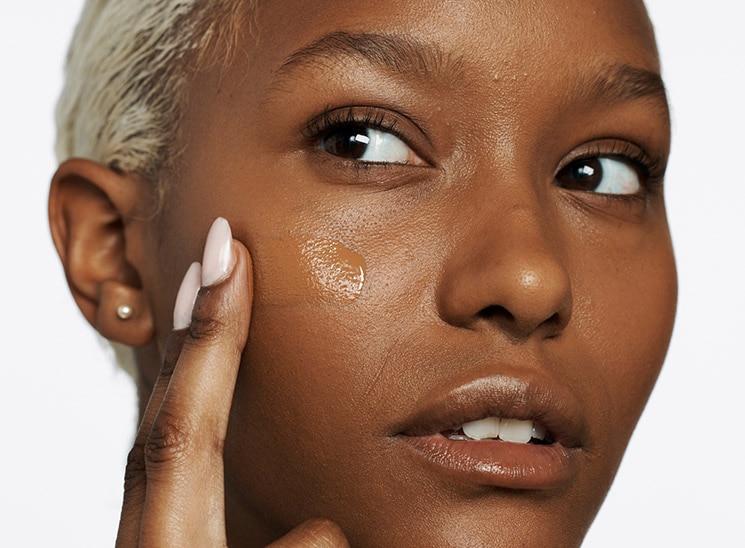
How To
Find Your Perfect Foundation Shade


Shop with a clean face.
Whether you’re perusing in-store or online, a foundation skin tone chart only works if you’re showing up with bare skin. Chances are, if you’ve already been wearing the wrong shade, you’re probably going to do it again unless you remove it completely before trying a new one. The point is to match your bare skin, not your current foundation. To avoid being off base, make your foundation hunt a no-makeup excursion. You can also try out our virtual try-on experience to help find your foundation shade.

Don’t go by shade names alone.
You know that expression “never judge a book by its cover”? That applies to how to find the right foundation shade, too. Shade names like espresso or beige are not universal to all brands or even amongst the different foundation types within the same brand. They can be a helpful guide, but if you want to get it right off the get-go, we always recommend colour-matching by a consultant, which is a free service. Also keep in mind that whenever a formula is different, the same shade name can look slightly different based on the interaction of its ingredients.
Foundation formulas, in full: which type is right for you?
Beyond SPF and skincare benefits, foundation comes in a few core formula types, each suited to different skin types and occasions. Building a small wardrobe of formulas — like having different denims for different occasions — means you're covered whatever the day calls for.
Liquid. Best for all skin types, especially dry, dehydrated or mature skin thanks to its lotion-like consistency. Liquid foundation is the most versatile formula: apply a light layer for a sheer natural finish, or build up to medium or full coverage. Available in finishes from matte and demi-matte to satin and dewy. A little goes a long way, since liquid spreads easily and blends over a lot of surface area.
Cream. Best for normal to dry or mature skin types that need medium or full coverage. Available in compact or stick form, cream foundations generally give more coverage than liquid but won't settle into fine lines, making them a top choice for events when you want a flawless, radiant look. Compacts are easy to carry since they won't leak and come with a mirror.
Powder. Best for combination to oily skin types that benefit from shine-absorbing coverage. Made in loose and pressed forms, powders offer lightweight coverage when pressed into skin, and can be layered on top of other formulas for extra coverage or used as a setting powder.
BB and CC cream. Best for all skin types. These hybrid formulas (half skincare, half foundation) provide medium coverage while adding skincare benefits like antioxidants, sunscreen and hydration — many people find they can skip a separate moisturiser altogether when using one.
Liquid. Best for all skin types, especially dry, dehydrated or mature skin thanks to its lotion-like consistency. Liquid foundation is the most versatile formula: apply a light layer for a sheer natural finish, or build up to medium or full coverage. Available in finishes from matte and demi-matte to satin and dewy. A little goes a long way, since liquid spreads easily and blends over a lot of surface area.
Cream. Best for normal to dry or mature skin types that need medium or full coverage. Available in compact or stick form, cream foundations generally give more coverage than liquid but won't settle into fine lines, making them a top choice for events when you want a flawless, radiant look. Compacts are easy to carry since they won't leak and come with a mirror.
Powder. Best for combination to oily skin types that benefit from shine-absorbing coverage. Made in loose and pressed forms, powders offer lightweight coverage when pressed into skin, and can be layered on top of other formulas for extra coverage or used as a setting powder.
BB and CC cream. Best for all skin types. These hybrid formulas (half skincare, half foundation) provide medium coverage while adding skincare benefits like antioxidants, sunscreen and hydration — many people find they can skip a separate moisturiser altogether when using one.
Choose a formula for your skin type.
Shade is of the utmost importance, but formula plays a large factor in your perfect foundation as well. Is SPF key, and are you looking for a foundation that helps with dark spots over time? Even Better Makeup does just that, with a moderate coverage and natural finish. Are you looking for a triple dose of skincare with your foundation? Even Better Clinical Serum Foundation is a full coverage, matte finish foundation that visibly improves skin with three potent serum technologies. You can also switch your foundation formula and shades up depending on the season, or what your skin is craving. Winter may call for a lighter shade with more hydration, while summer may call for a deeper shade with more nourishing ingredients.

Understand your undertones.
Clinique foundations are formulated and created for all skin tones and undertones—it’s just about understanding the ins and outs of yours. To identify what type of undertones you have, examine the inside of your wrist. If your veins are blue, then you have neutral undertones, which means you can wear both cool and warm foundation shades. If your veins look purple-ish, then you have cool undertones, giving your skin a pink tint. If your veins look green, then you have warm undertones, giving your skin a golden tone. The shades in Clinique Even Better foundation shades are easy to navigate because along with shades like Truffle or Alabaster, they are labeled with qualifiers like WN and CN that stand for Warm Neutral and Cool Neutral to help you out.

Swatch 3 shades.
While it’s tempting to reach for a bottle that looks like the right foundation shade, it’s important to always try before you buy. The best technique for finding your best shade is to first choose three that appear to be a good match, then swatch them (apply a short line) next to each other on your jawline, leaving a little skin between each. One of the most common mistakes is choosing a foundation that only matches your face. It should also blend seamlessly onto your neck too. If you’re shopping online, the virtual try-on is great for this as well.

Take the winner for a test drive.
After determining which swatch looks like the best foundation shade match, remove the other two and fill in a small section of your jawline with the leading contender. Now take a cotton swab soaked in makeup remover and sweep it down the middle of the patch. It’s not breaking news that you should always check the way your foundation looks in natural light before making a commitment. Start in the middle of the face where you need the most coverage, around the nose, the corners of the eyes and the cheeks, then blend outwards. Use a foundation brush or your fingers to gently stipple the product, building from a light layer rather than applying too much at once.
Application FAQs: concealer order and the best tools
Do you apply concealer before or after foundation?
It depends on what you're concealing. To cover dark circles or a little redness around the nose, even things out first with foundation, then add concealer where needed to brighten. Concealing something that needs more effort, like a blemish? Apply concealer first to colour-correct, then pat foundation on top for expert-level camouflage.
What's the best tool for applying foundation?
Fingers give a natural look, but a foundation brush creates a smoother, more polished finish with better staying power. A flat foundation brush is best for all-over application, a tapered brush works into narrow areas like the corners of the nose, mouth and hairline, and a buff brush gently blends foundation into skin using small, circular motions.
There you have it: how to find the right foundation shade.
Application FAQs: concealer order and the best tools
Do you apply concealer before or after foundation?
It depends on what you're concealing. To cover dark circles or a little redness around the nose, even things out first with foundation, then add concealer where needed to brighten. Concealing something that needs more effort, like a blemish? Apply concealer first to colour-correct, then pat foundation on top for expert-level camouflage.
What's the best tool for applying foundation?
Fingers give a natural look, but a foundation brush creates a smoother, more polished finish with better staying power. A flat foundation brush is best for all-over application, a tapered brush works into narrow areas like the corners of the nose, mouth and hairline, and a buff brush gently blends foundation into skin using small, circular motions.
There you have it: how to find the right foundation shade.
Shop the Story
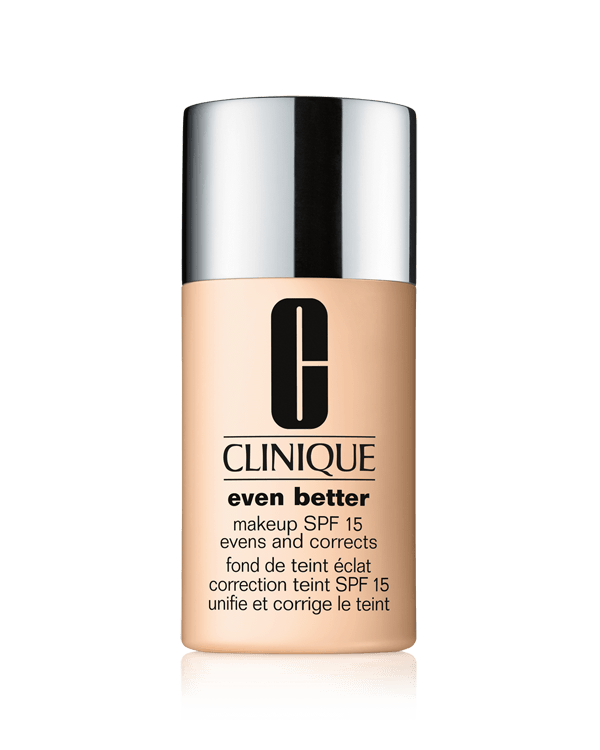
CN 40 Cream Chamois
30 ml
30 ml
30 ml
30 ml
30 ml
30 ml